

 call
call
 SMS
SMS






 Cart
Cart

We’ve been doing air suspension for a long time now. While the shop opened in 2012, the guys on our staff have been working on custom cars and trucks for easily 20 years. That’s pretty impressive.
But air suspension itself has been around for decades — over 120 years, actually — and that means there have been a lot of different variations on the theme. So how did it all come to be? Let’s dive in and find out.
The Air Bagged Bike
That’s right, the first person to apply for a patent for an air suspension was for a bike. It was way back in 1901 that Archibald Sharp came up with the idea to use air suspension on a bicycle, and in 1909 that came to fruition on something with a little more power: a motorcycle. Believe it or not, that idea was on January 7th, 1901, and just 15 days later, William W. Humphreys came up with the concept for other vehicles.
By the time WWII rolled around, the military was using air suspension systems on planes and heavy vehicles. This way they could carry more weight just by adding more pressure. It was a pretty good idea, and one still in use today.
Enter Air Lift
Would it shock you to know that Air Lift was one of the first companies to sell air springs? Back in 1949 they build air bags that fit inside of a coil spring to provide extra towing and hauling capacity. That extra and adjustable firmness ended up being appealing to race car drivers, and by the 1950s they were being used in Nascar.
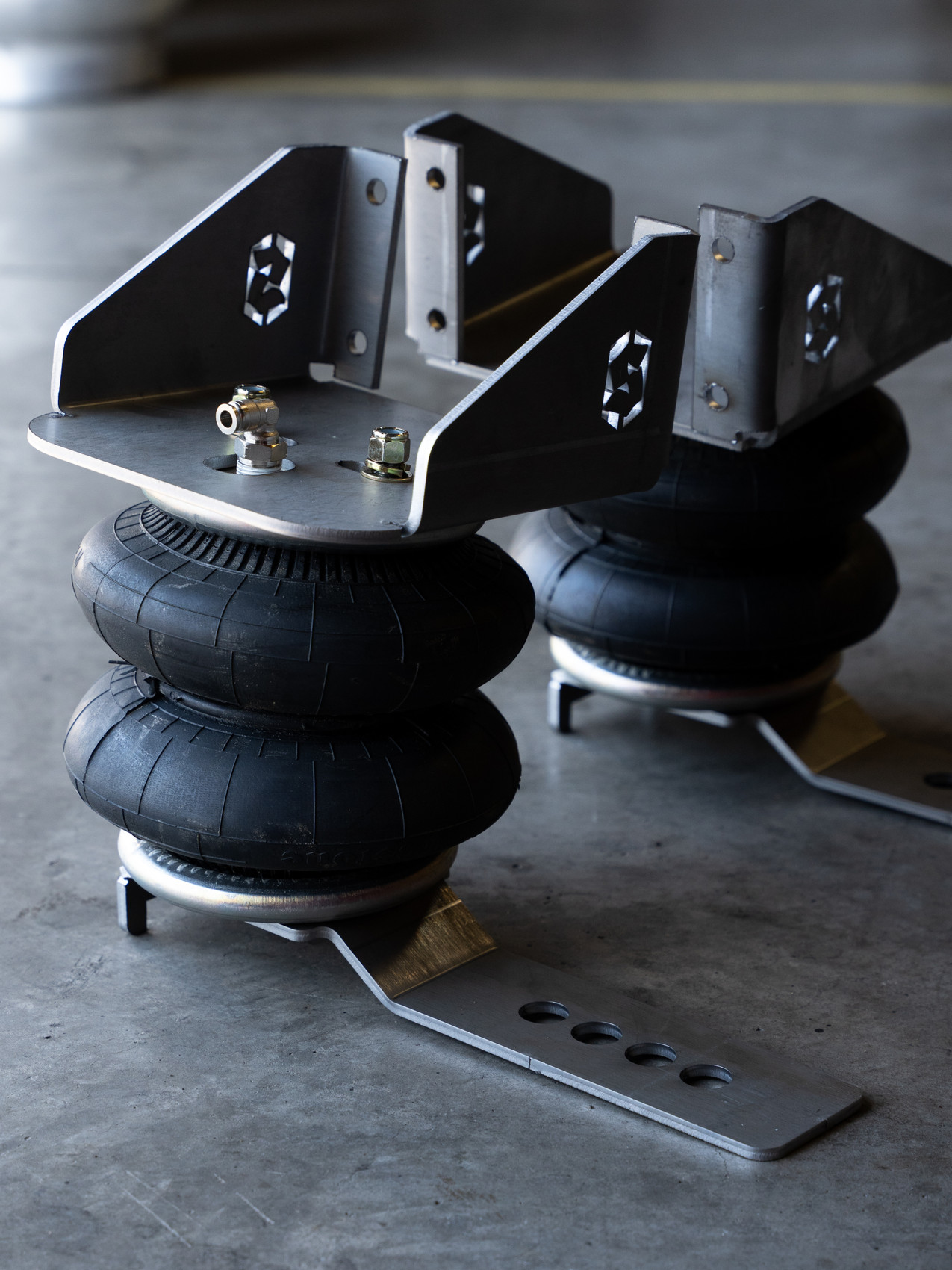
As the years went on, Air Lift focused mostly on the concept of “helper bags,” which is basically what we sell today. These give trucks more capacity for towing or putting stuff in the bed. But in the 1990s, things changed. Now minitruckers and custom truck guys were heading to semi-truck dealers and buying Firestone air bags. Then they’d build their own brackets and get them into their trucks. Soon we were seeing air bags taking over hydraulics as the dominant adjustable suspension.
Air Ride Management Goes Digital
While air bagged vehicles were cool, most of the technology at the time was fairly manual. You would look at an air gauge on your pillar to set your ride height, but that wasn’t the most reliable thing since it all depended on whether or not you had an extra burrito at lunch.
There were people who attempted air management systems, but the one that made a big splash was Accuair. They started up in 2001 and would eventually produce the eLevel system. This used ride height sensors and an ECU to lift your car or truck to pre-determined positions. Now you could just turn the key and watch your bags fill all by themselves. This type of setup became the standard, and now we get a ton of people who don’t just want bags, they want something like an eLevel+ or Air Lift Performance 3H/3P.
It’s So Much Better Now
We remember cruising the truck runs with ball valves and nitrogen tanks. Needless to say, the technology has improved a ton since then and the community is all the better for it. If you’re interested, hit us up by email, phone or just stop by the shop. We’ll point you in the right direction.